

Taking the First Step Towards Support
Deciding to begin therapy for your child is a powerful, caring decision. It’s natural to feel uncertain or even anxious, but this step is often the start of meaningful growth. As a parent, you want to do everything possible to support your child’s developmental and emotional well-being. Understanding what happens in the first therapy session can help ease your concerns and make you feel more prepared for the journey ahead.
At Shaping Insight, Mulund, we understand the importance of making this first step comfortable for both parents and children. Our child-friendly setup and experienced therapists create a safe, nurturing space for open communication and support. This blog is your complete guide to what happens in that first session — from initial interactions to assessment and next steps — so you can walk in with clarity and confidence.
Understanding Child Therapy
Child therapy is a professional intervention designed to help children manage emotional, behavioral, and developmental challenges. It includes various approaches such as play therapy, cognitive-behavioral therapy, and speech and occupational therapy, depending on the child’s needs. Many parents wonder if therapy is only for children with “big issues” — in reality, it can support any child experiencing stress, developmental delays, learning difficulties, or emotional struggles.
By addressing concerns early, pediatric therapy can play a crucial role in improving a child’s ability to express themselves, form healthy relationships, and thrive at home and school.
Creating a Comfortable Start: Preparing for the First Session
Before your child’s first therapy session, a little preparation goes a long way. It’s helpful to talk to your child in age-appropriate language about where they are going and who they will meet. Set realistic expectations by explaining that this visit is about “talking and playing” with someone who helps children feel better.
→ Helpful Tips for Parents
- Gather relevant documents such as school reports or previous assessments
- Make a note of your child’s behaviors or difficulties
- Talk to your child positively about therapy
- Avoid saying things that may cause fear like “you’re going to get fixed”
- Be honest with the therapist — your openness helps them understand your child better
At Shaping Insight, Mulund, our environment is designed to be warm and welcoming, with child-sized furniture, engaging play areas, and sensory-friendly spaces. This setting helps children feel secure and encourages natural interaction.
The Therapist’s Approach to Building Trust
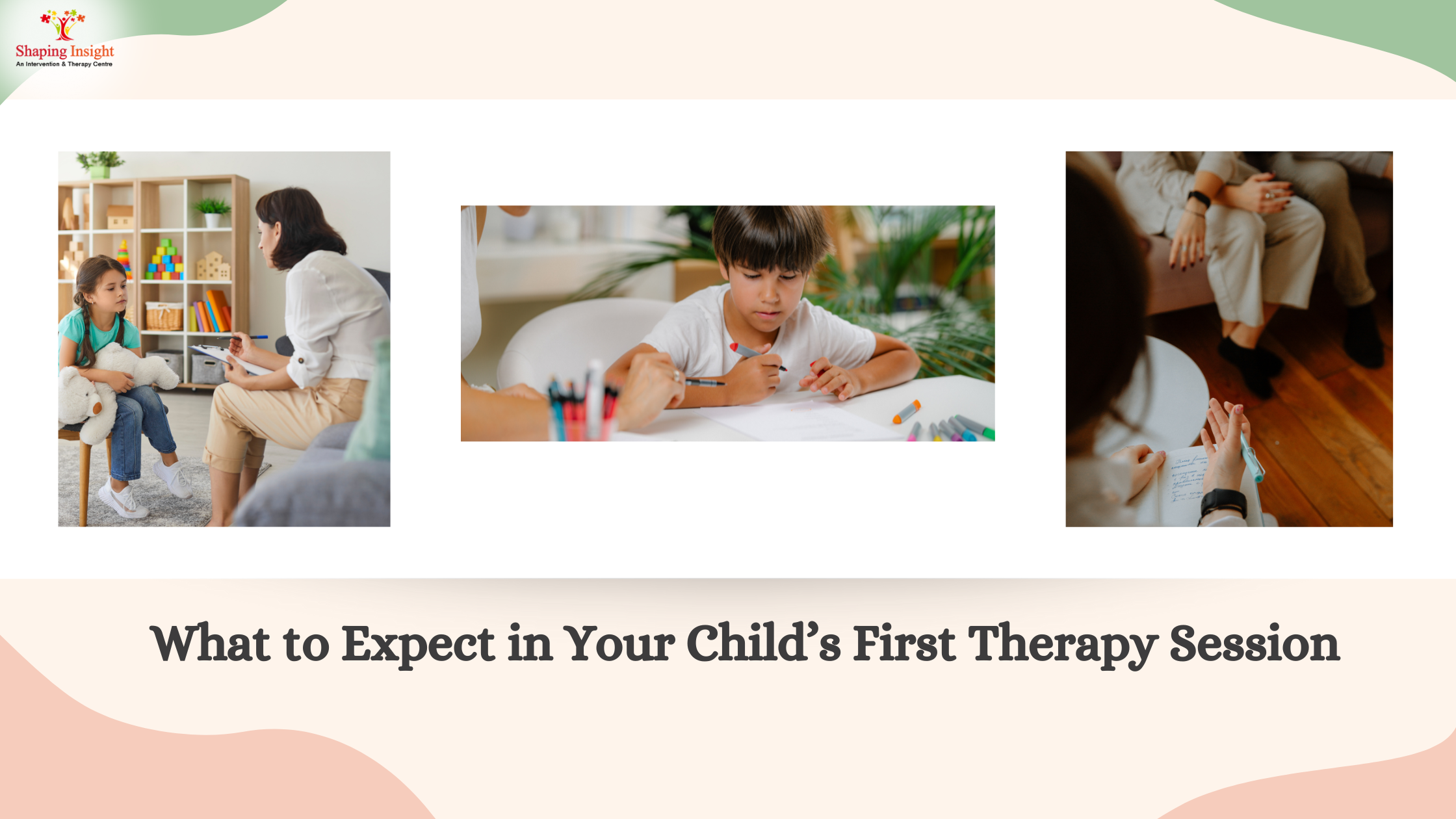
In the initial session, the therapist focuses on building rapport with your child. Especially for young children, this is often done through play-based interactions. Games, toys, and drawing are tools that allow the therapist to observe your child’s responses, communication style, and social behavior in a non-threatening way.
Therapists will also meet with you to gather background details. This includes medical history, developmental milestones, family dynamics, and any concerns you’ve noticed. Your voice as a parent is essential in forming a complete picture of your child’s needs.
The Assessment Phase: Understanding Your Child’s Unique Needs
The heart of the first therapy session is the assessment. This is not a test to pass or fail — it’s a way for the therapist to understand your child better and determine how to support them.
→ Key Assessment Components
- Parent Interview → Understand daily routines, challenges, and family history
- Child Observation → Monitor behavior, attention, and interaction through activities
- Play-Based Assessment → Engage in structured play to assess communication and motor skills
- Informal Screenings → Simple tasks or checklists to explore specific areas of development
At Shaping Insight, we believe assessment is a collaborative process. Your input is vital, and the therapist will communicate their observations with sensitivity and clarity.
Discussion and Initial Impressions: What You’ll Learn
At the end of the first session, the therapist may share preliminary impressions. While a formal diagnosis may require multiple sessions, they can often identify areas of concern or strength. This is also the time to ask questions — about your child’s behavior, therapy options, or anything you’re unsure about.
Based on this discussion, the therapist may provide initial recommendations such as therapy frequency or suggest strategies to try at home.
Setting Therapy Goals and Planning Ahead
Together with you, the therapist will begin outlining possible therapy goals. These might include improving social interaction, developing language, or enhancing fine motor skills. Each goal is tailored to your child and your family’s priorities.
You’ll also get clarity on the therapy approach — whether sessions will involve speech therapy, occupational therapy, or a combination. The therapist will explain how sessions are structured, what progress looks like, and how often therapy is recommended.
Preparing as a Parent: What to Bring and How to Support
Being well-prepared can help your child’s first session go smoothly.
→ Parent Preparation Checklist
- Bring previous reports and school observations
- Note your specific concerns and observations
- Prepare your child with a calm, friendly explanation
- Be honest and open with the therapist
Your involvement matters greatly. When therapists and parents work together, outcomes are significantly better.
Your Partner in Development: Shaping Insight, Mulund
At Shaping Insight, we take pride in creating a trusted space where every child is met with understanding and support. Our therapists are experienced in working with a wide range of developmental and behavioral challenges, from speech delays to sensory processing difficulties.
Located conveniently in Mulund, our center is designed to offer quality child therapy services in a nurturing environment. If you’re looking for a supportive team to guide your child’s journey, we’re here to help.
Meet Our Expert Therapists
Our team of child psychologists, speech therapists, and occupational therapists are highly qualified and trained in evidence-based approaches. They specialize in:
- Using child-centered, play-based therapy techniques
- Building trust with both child and family
- Adapting strategies to each child’s unique learning style
We prioritize building strong relationships with families and believe in empowering parents as active participants in the process.
Next Steps After the First Session
Once therapy begins, consistency is key. Future sessions will continue to build on the initial assessment, introducing structured goals and tracking progress. You’ll also receive guidance on how to support your child at home between sessions.
→ What You Can Expect
- Regular updates from the therapist
- Milestone-based progress tracking
- Tools and resources for at-home reinforcement
- Opportunities for parent-therapist collaboration
Conclusion: A Journey of Growth Begins with a Single Step
Seeking therapy is a proactive and compassionate step toward helping your child thrive. It’s not just about addressing problems — it’s about building skills, confidence, and well-being. At Shaping Insight, Mulund, we’re committed to walking with you on this journey, every step of the way.
If you’re considering therapy for your child and looking for guidance, let Shaping Insight be your trusted partner in Mulund. Reach out today for a confidential initial therapy consultation and take the first step toward meaningful progress.