
Introduction
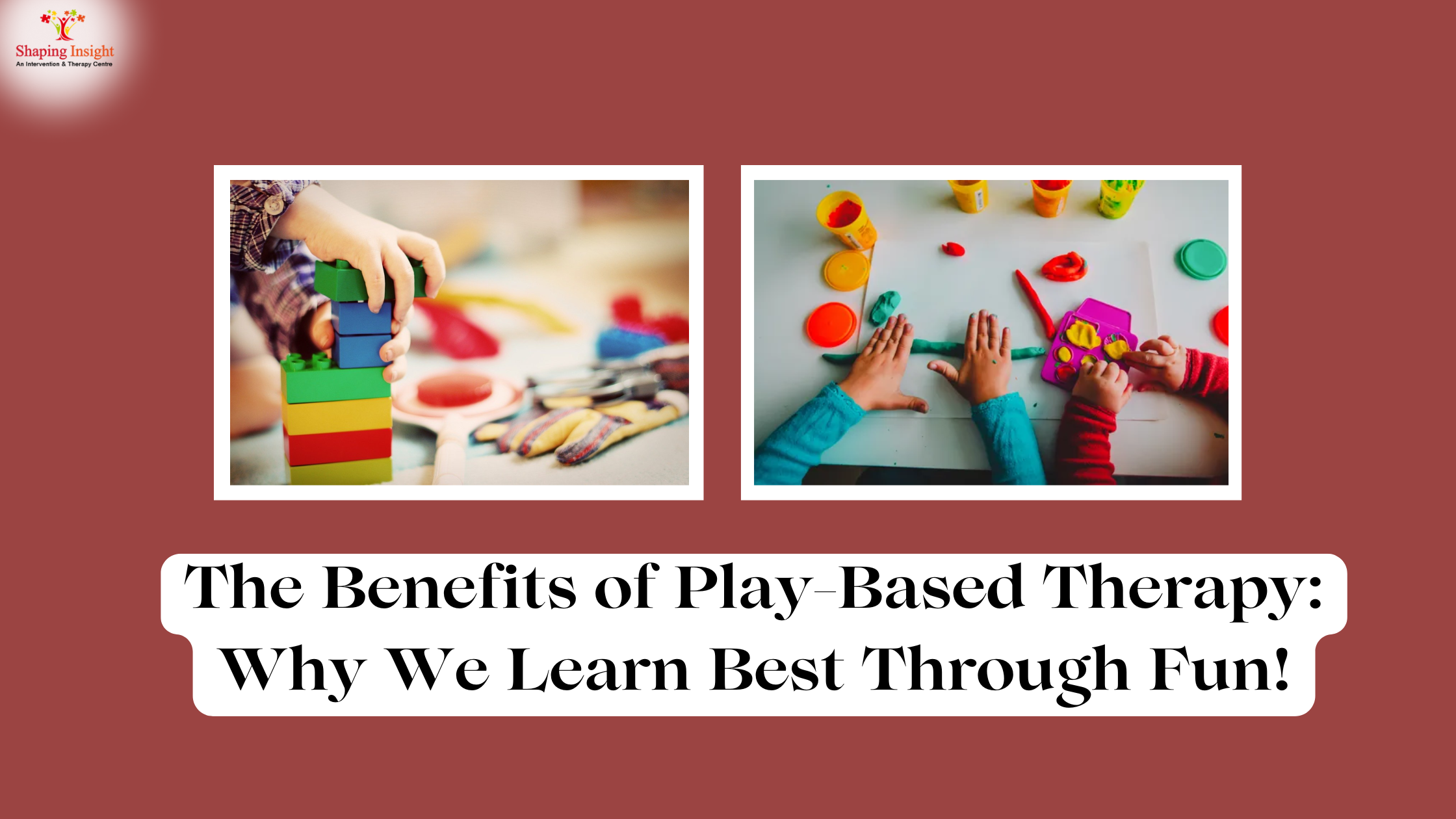
Play is far more than just fun for children it’s their most natural and powerful tool for learning. Play-based therapy uses purposeful, structured play to help children develop critical skills across emotional, social, physical, and cognitive domains. At Shaping Insight, Mulund, we understand that when therapy feels like play, children become more engaged, confident, and open to learning. This blog will help parents and caregivers understand what play-based therapy is, how it works, and why it’s one of the most effective approaches for developmental support.
The Science Behind the Fun: Why Play Works in Therapy
Play-based therapy taps into children’s natural love for exploration. Unlike traditional drill-based approaches, play offers a relaxed and dynamic way for children to practice and master developmental skills.
How Play Enhances Therapy:
→ Intrinsic Motivation: Children are more likely to participate when therapy feels like play. The fun factor increases attention, effort, and learning without added pressure.
→ Natural Skill Development: From communication to coordination, play lets children develop abilities in familiar, low-stress settings.
→ Brain Growth: Sensory-rich play strengthens neural connections, supporting memory, learning, and social-emotional development.
→ Lower Anxiety: Children feel safer and more comfortable, reducing resistance and fostering trust in the therapist.
→ Whole-Child Development: Play simultaneously supports multiple areas—like when a child builds a tower, solving problems while developing fine motor and communication skills.
Play-Based Therapy vs Traditional Therapy
Here’s how play-based therapy differs from more structured methods:
| Play-Based Therapy | Traditional Therapy |
| Child-led and interest-driven | Therapist-led and structured |
| Focuses on learning through exploration | Focuses on repetition and instruction |
| Flexible, dynamic sessions | Fixed format with pre-set tasks |
| Builds engagement through fun | May involve less enjoyable repetition |
| Targets multiple skills simultaneously | Targets skills in isolation |
Beyond Just Playing: Goals Achieved Through Play-Based Therapy
While it may look like your child is simply having fun, every activity in play-based therapy is intentionally designed to support development.
Common Therapy Goals Achieved Through Play:
→ Speech and Language: Games encourage conversation, naming, turn-taking, and vocabulary growth in natural contexts.
→ Fine and Gross Motor Skills: Playdough, puzzles, swings, and obstacle courses help build coordination, strength, and control.
→ Sensory Processing: Sand, textured toys, and movement activities help children better respond to touch, movement, and sound.
→ Cognitive Development: Problem-solving and memory games like puzzles and sequencing build focus and critical thinking.
→ Social-Emotional Learning: Role-play and group games teach sharing, self-regulation, empathy, and self-confidence.
Techniques Used in Play-Based Therapy
Our therapists at Shaping Insight use a wide range of playful tools and strategies to target specific developmental goals.
→ Role-playing and pretend play to enhance emotional expression and creativity
→ Art and drawing activities to promote communication and motor coordination
→ Board games and physical games to build attention, patience, and problem-solving
→ Sensory bins and swings to support sensory processing
→ Therapist-guided interaction within play for targeted learning opportunities
What Play-Based Therapy Looks Like at Shaping Insight, Mulund
At Shaping Insight, Mulund, play-based therapy is a cornerstone of our approach. Every session is uniquely tailored to a child’s developmental needs and personal interests. Therapy doesn’t feel like work here it feels like fun with purpose.
Our Approach to Play-Based Therapy:
→ Individualized Play Plans: Based on thorough assessment, therapy is tailored to suit each child’s strengths, challenges, and preferences.
→ Enriched Play Environments: Our facility features specialized play zones like sensory corners, gross motor areas, and creativity corners.
→ Therapist-Guided Play: Sessions are led by trained therapists who introduce challenges, model skills, and facilitate progress.
→ Parent Partnership: Parents are included in the process with regular updates, tips, and play-based strategies to use at home.
Advantages for Children and Families
The impact of play-based therapy extends beyond the therapy room, improving daily life and family relationships.
→ Higher Engagement: Children are excited about therapy, increasing participation and motivation.
→ Skill Transfer to Real Life: Because learning occurs in natural ways, skills apply easily at home, in school, and in social settings.
→ Less Resistance: Sessions feel enjoyable, reducing pushback from children and promoting long-term consistency.
→ Development Across Domains: Cognitive, physical, and emotional growth are all supported simultaneously.
→ Empowered Parents: Families gain confidence and tools to support development through everyday interactions.
Take the First Step Toward Fun & Progress – Shaping Insight, Mulund
At Shaping Insight, Mulund, we blend evidence-based techniques with joyful play to help children thrive. Our team of compassionate therapists is dedicated to creating a safe, supportive environment where children can grow, learn, and develop essential life skills—while having fun. If your child faces developmental challenges or you simply want to support their full potential, contact us today. Let’s make therapy a fun and transformative experience for your child.
Conclusion:
Play is the language of childhood. When children engage in guided play, they not only enjoy the process but also build skills that lay the foundation for lifelong success. At Shaping Insight, Mulund, we’re here to support your child through playful, personalized therapy that meets their needs and sparks their potential. For more information or to schedule a consultation, contact us today. Together, let’s turn therapy into play—and progress into joy.