
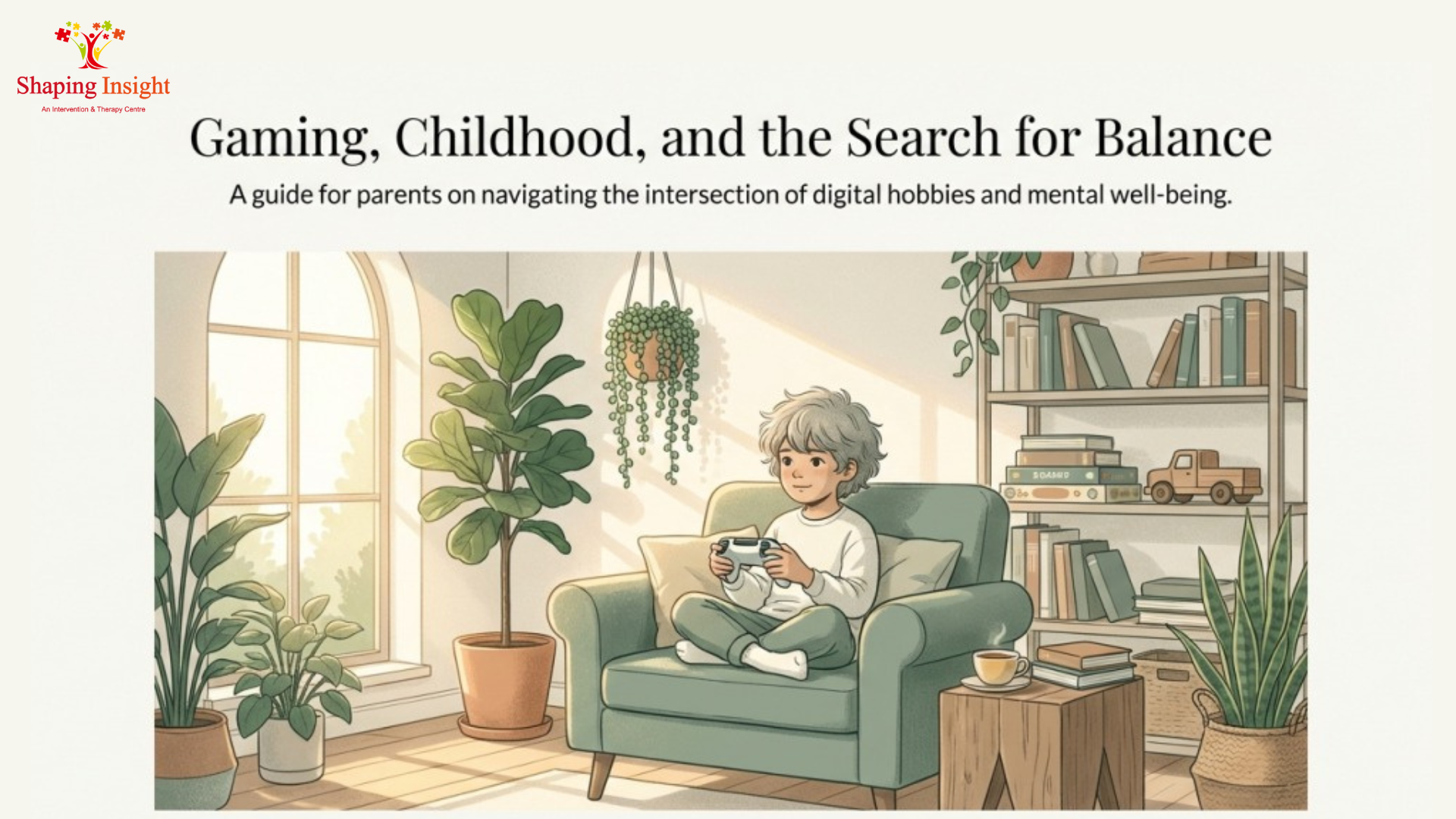
Video games are a common part of childhood and adolescence today. For many children, gaming is a source of enjoyment, relaxation, and connection. For others, excessive or unstructured gaming can begin to affect focus, emotional regulation, and social interaction.
At Shaping Insight, Mumbai, we often work with families who are unsure whether gaming is helping or harming their child’s mental and emotional well-being. The answer is rarely black and white. Like most activities, gaming has both positive and negative effects depending on how it is used.
The Positive Effects of Gaming on Mental Health
When used in moderation, gaming can support several developmental skills.
Gaming often improves attention to detail and visual processing. Many games require players to track information, respond quickly, and solve problems, which can strengthen certain cognitive skills.
Gaming can also support emotional regulation when used as a recreational outlet. After a long school day, playing a favourite game can help children relax and decompress, especially when they struggle to unwind through other activities.
For some children, gaming offers a sense of social connection. Online or cooperative games can help children feel included, practise teamwork, and build friendships, particularly for those who find face-to-face interaction challenging.
When balanced with other activities, gaming can be a healthy part of a child’s routine.
When Gaming Begins to Affect Focus and Behaviour
Difficulties arise when gaming becomes excessive, unstructured, or replaces essential daily activities.
Children who spend long hours gaming may experience reduced attention span, especially for non-preferred tasks such as homework, reading, or classroom learning. Fast-paced games can make slower, real-world activities feel less engaging by comparison.
Some children may also show emotional changes, such as irritability when asked to stop gaming, difficulty calming down, or strong emotional reactions to losing or interruptions. These responses often indicate challenges with regulation rather than defiance.
Sleep disruption is another common concern. Late-night gaming can interfere with rest, which directly impacts mood, focus, and emotional control during the day.
Gaming and Social Interaction
While gaming can support connection, it can also limit real-world social experiences when it becomes the primary form of interaction.
Children may begin to avoid in-person play, family time, or group activities. Over time, this can affect social confidence, communication skills, and emotional awareness. A healthy balance includes opportunities for both digital interaction and face-to-face relationships.
How Therapy Can Support Healthy Balance
At Shaping Insight, Mulund, therapy does not focus on eliminating gaming but on helping children and families create balance.
Occupational therapy supports attention, regulation, and daily routines. Remedial therapy helps children manage academic demands when focus is affected. Therapy also supports emotional awareness and coping skills, helping children respond more flexibly to transitions and limits.
Families are guided to set predictable routines, clear boundaries, and realistic expectations around screen time, without using punishment or shame.
Supporting Children Without Blame
Gaming itself is not the problem. The challenge lies in imbalance. Understanding a child’s emotional needs, stress levels, and regulation skills helps families respond thoughtfully rather than reactively. Gaming itself is not the problem. The challenge lies in imbalance. Understanding a child’s emotional needs, stress levels, and regulation skills helps families respond thoughtfully rather than reactively.
At Shaping Insight, Mulund, we support children and parents in building routines that protect mental health while allowing children to enjoy activities they love. If gaming is affecting your child’s focus, emotions, or social connection, a professional assessment can help identify supportive strategies and guide healthy habits.