

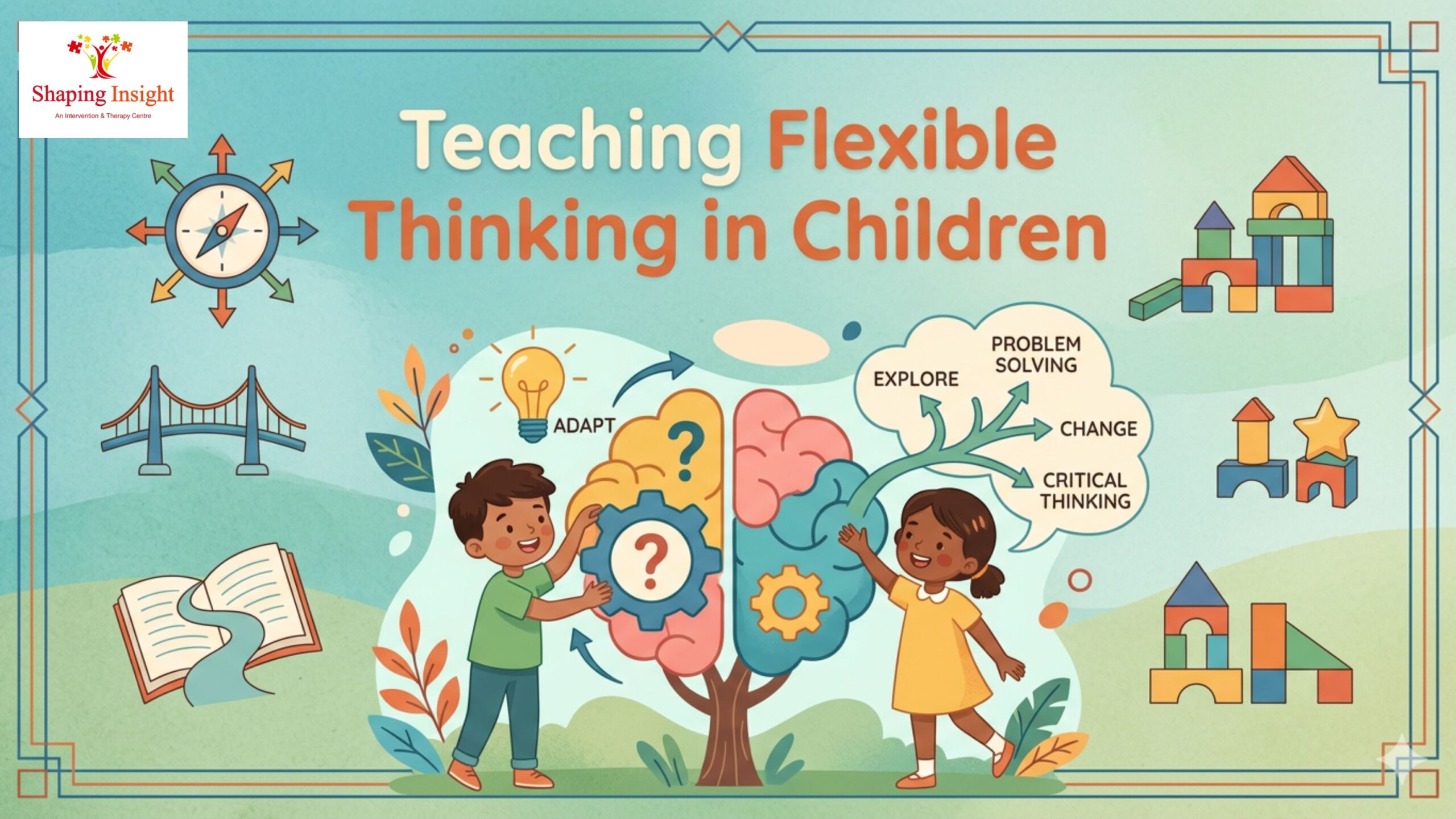
Flexibility is a foundational life skill. It allows children to adjust when plans change, tolerate disappointment, solve problems creatively, and respond calmly in unpredictable situations.
At Shaping Insight, Mulund – Mumbai, we work with many children who experience rigid thinking patterns. These patterns are not intentional defiance. They are often linked to emotional regulation, executive functioning, and cognitive processing differences.
Teaching flexible thinking in children is not about forcing change. It is about gently building mental adaptability step by step.
What Is Flexible Thinking?
Flexible thinking refers to the ability to:
- Adapt to unexpected changes
- Consider alternative perspectives
- Generate multiple solutions
- Accept different outcomes
- Shift attention between tasks
Children who struggle with flexibility may:
- Become upset when routines change
- Insist on specific ways of doing things
- Struggle with losing games
- React strongly to minor disruptions
Why Some Children Think Rigidly
Rigid thinking can stem from:
- Anxiety
- Need for predictability
- Sensory sensitivities
- Executive functioning challenges
- Developmental differences
Predictability often feels safe. Change feels threatening.
Understanding this helps adults respond with empathy rather than frustration.
The Link Between Regulation and Flexibility
A dysregulated child cannot think flexibly. Emotional overwhelm reduces cognitive flexibility.
At Shaping Insight, Mulund, therapy often focuses first on emotional regulation before addressing flexible thinking skills.
Calm brains learn better.
Gentle Strategies to Introduce Flexible Thinking
1. Plan A and Plan B Thinking
Introduce simple language:
“This was Plan A. What could Plan B be?”
This builds alternative thinking without pressure.
2. Controlled Choices
Offer two acceptable options rather than open-ended change.
3. Small, Predictable Changes
Gradually introduce minor variations into routines.
4. Modelling Flexibility
Adults modelling calm responses to change helps children internalise similar behaviours.
5. Celebrating Attempts
Even small moments of adaptability deserve recognition.
Therapy Support at Shaping Insight, Mulund
At Shaping Insight, Mulund – Mumbai, therapy strengthens executive functioning skills such as:
- Planning
- Organisation
- Cognitive shifting
- Emotional control
Structured exercises, guided problem-solving, and real-life scenario practice build confidence gradually.
Why Flexible Thinking Matters Long-Term
Children who develop flexibility are better able to:
- Handle academic challenges
- Build friendships
- Manage disappointment
- Transition into adolescence more smoothly
Flexibility supports independence and emotional resilience.
Teaching flexible thinking is not about eliminating structure. It is about helping children feel safe enough to adapt.
If your child struggles with rigidity, frustration during change, or emotional overwhelm when plans shift, Shaping Insight, Mulund can provide structured, supportive guidance tailored to their needs.