

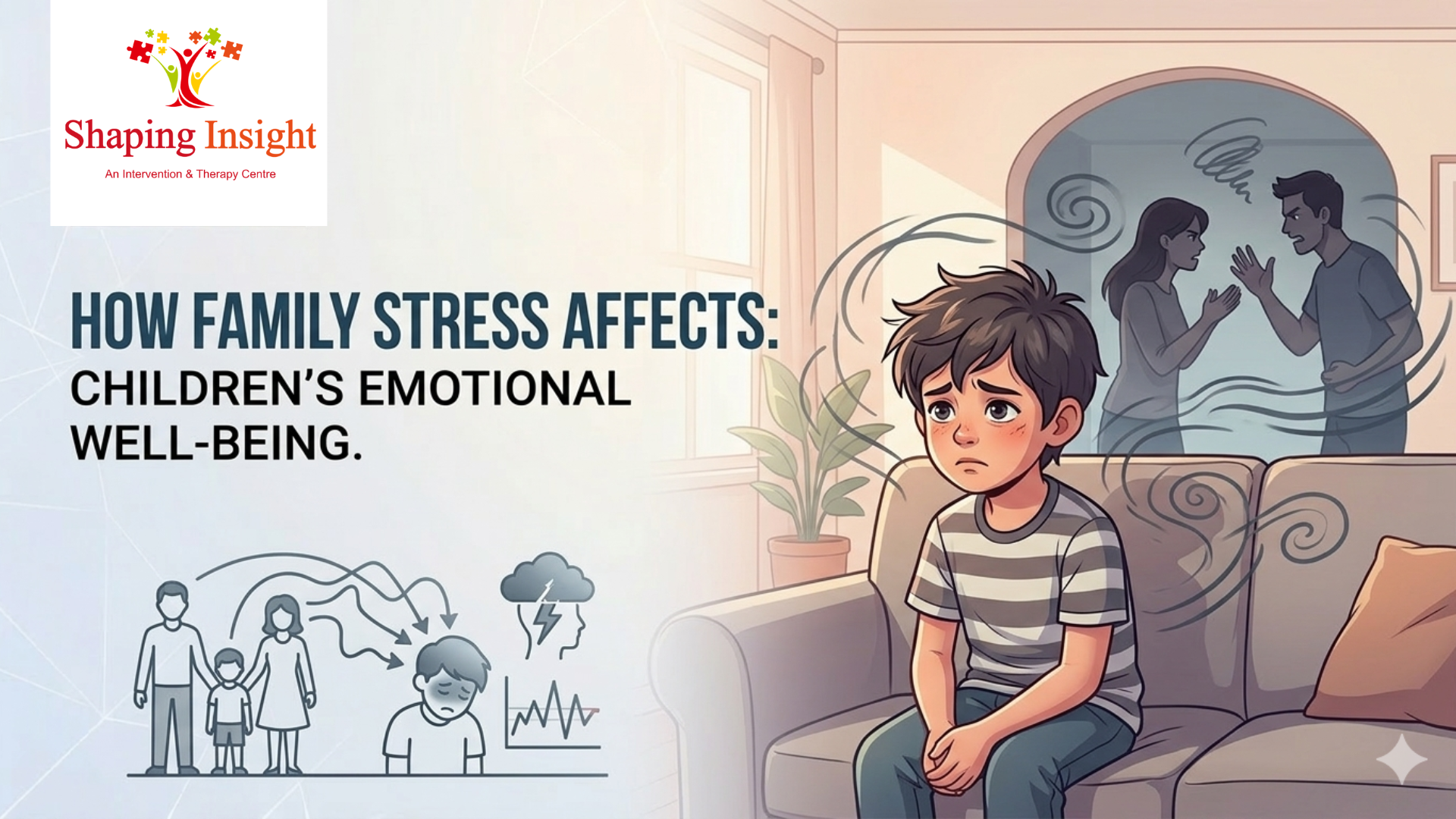
Children are deeply influenced by the environment around them. When families experience stress due to financial challenges, parental disagreements, or other household pressures, children often sense these changes even when adults try to shield them.
At Shaping Insight, Mulund – Mumbai, we frequently work with families who notice changes in their child’s behaviour during periods of family stress. Understanding how these experiences affect children can help parents respond with greater awareness and support.
Children Often Absorb More Than We Realise
Children may not fully understand the reasons behind household stress, but they can still feel its emotional impact. Changes in tone of voice, daily routines, or family interactions can create uncertainty for a child.
Because children rely on their family environment to feel safe and secure, ongoing stress at home may affect their emotional balance.
Some children may become more sensitive, anxious, or withdrawn, while others may show frustration or behavioural changes.
Common Sources of Family Stress
Families can face many types of challenges, and each household experiences them differently. Some common sources of stress include:
- Financial or economic difficulties
- Parental disagreements or conflict
- Work-related pressures
- Major life changes such as relocation or illness
- Increased responsibilities within the family
While these challenges are a normal part of life, prolonged stress can sometimes influence a child’s emotional well-being.
How Stress at Home May Affect Children
When children experience ongoing tension in their environment, they may struggle to process their feelings.
Possible signs include:
- Increased irritability or emotional reactions
- Difficulty concentrating on schoolwork
- Changes in sleep patterns
- Withdrawal from social activities
- Seeking reassurance more frequently
Children may not always express their worries verbally. Instead, their emotions often appear through behaviour.
The Importance of Emotional Security
Children thrive when they feel safe, supported, and understood. Even during difficult times, maintaining predictable routines and open communication can help children feel more secure.
Simple actions such as spending quality time together, listening to a child’s concerns, and reassuring them that they are loved can have a powerful impact.
When parents remain calm and supportive, children learn that challenges can be managed without overwhelming the family environment.
How Therapy Can Support Families
At Shaping Insight, Mulund, therapy helps children develop emotional awareness, coping strategies, and confidence when navigating difficult situations.
Occupational therapy and developmental support can help children regulate emotions, manage stress, and strengthen problem-solving skills.
In addition, therapists often guide parents in creating supportive routines and communication strategies that help children feel safe during periods of change or uncertainty.
Supporting Children Through Challenging Times
Every family experiences stressful moments. What matters most is how families respond and support each other during these times. When children feel heard, reassured, and emotionally supported, they are better able to adapt to challenges and maintain emotional balance. If family stress is affecting your child’s mood, behaviour, or learning, early guidance can make a meaningful difference.
At Shaping Insight, Mulund, our team works closely with families to support children’s emotional well-being and help them build resilience during difficult periods.