

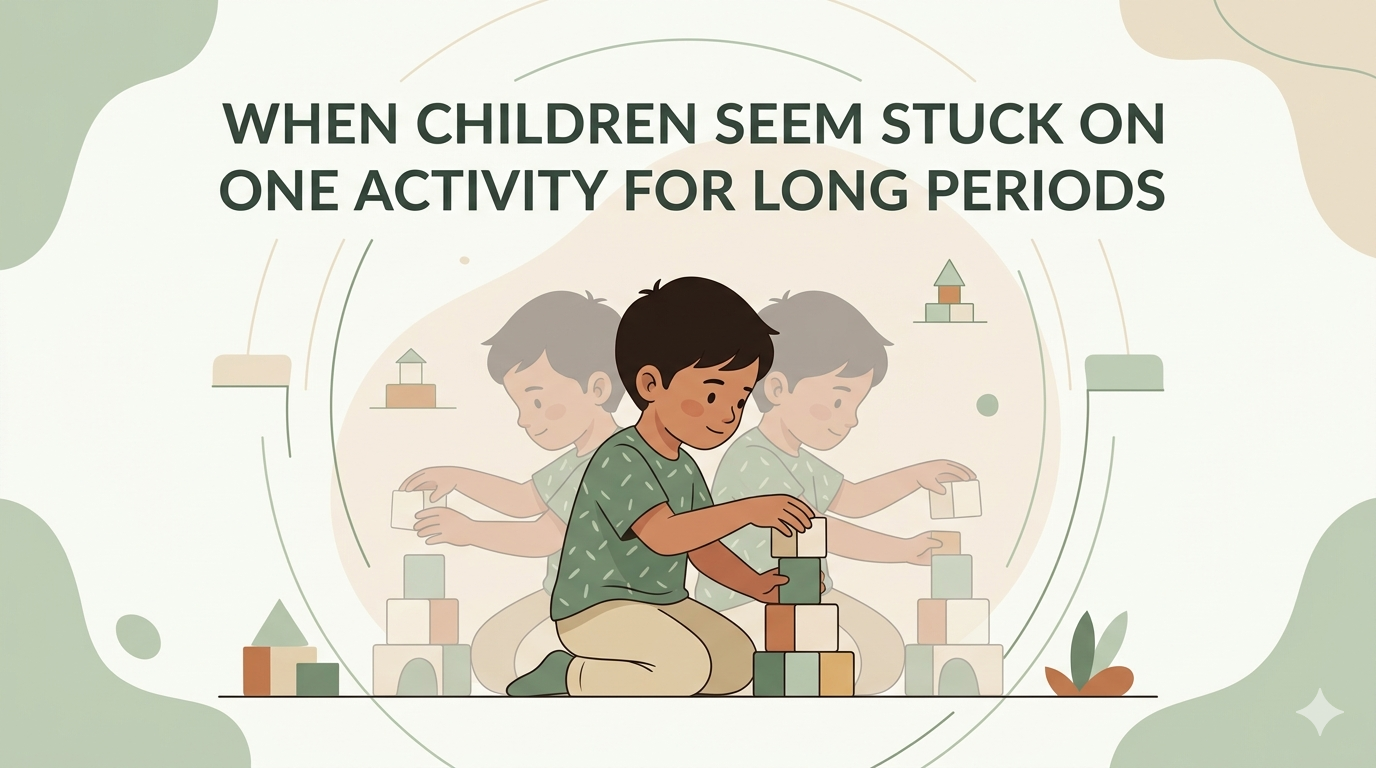
Many parents notice that their child wants to play the same game repeatedly, watch the same videos every day, or spend long periods engaged in one familiar activity. This often leads to the question, “Why does my child get stuck on one activity and resist trying something new?” While this behaviour may appear stubborn or repetitive, it is often connected to how a child processes comfort, predictability, emotions, and change.
Children naturally enjoy repetition because it helps them learn, build confidence, and make sense of the world around them. However, when a child consistently struggles to move on from one activity or becomes distressed during transitions, it may indicate challenges with flexibility, emotional regulation, sensory processing, or adapting to change. Understanding the reasons behind this behaviour is the first step toward providing meaningful support.
At Shaping Insight, Mulund – Mumbai, we often help families understand that this behaviour is not random. It is usually linked to how children process comfort, predictability, and engagement.
Why Is Flexibility Important for Child Development?
Cognitive flexibility is the ability to adapt to new situations, shift attention, solve problems, and adjust to changes in routines or expectations. It is an essential developmental skill that supports learning, emotional regulation, social interaction, and independence.
Children with good flexibility are better able to:
- Adapt to changes in daily routines
- Try new activities confidently
- Shift attention between tasks
- Solve problems creatively
- Participate in group activities
- Handle unexpected situations calmly
- Develop stronger social relationships
- Manage disappointment when things do not go as planned
- Transition smoothly between home, school, and extracurricular activities
- Build resilience when facing new experiences
As flexibility develops, children become more confident in exploring their environment, learning new skills, and coping with everyday changes.
Understanding Repetitive Engagement
Repetition is a natural part of learning. It helps children:
- Understand patterns
- Build familiarity
- Gain a sense of control
- Develop mastery
Through repetition, children strengthen brain connections, improve memory, and develop confidence in their abilities. Repeating favourite activities is a normal part of childhood and often supports healthy learning and skill development.
However, when children strongly resist moving away from one activity, it may indicate a deeper need.
Signs That Your Child May Be Struggling with Flexibility
Children who find it difficult to move beyond familiar activities may:
- Repeat the same activity for long periods
- Resist trying new games or experiences
- Become upset when routines change
- Have difficulty shifting attention between tasks
- Prefer predictable daily schedules
- Become anxious when unexpected changes occur
- Frequently ask for the same toys, books, or videos
- Insist on completing activities in a particular order
- Show emotional outbursts when interrupted during preferred activities
- Avoid unfamiliar environments or situations
These behaviours can vary in intensity and may become more noticeable as children grow and encounter new social and academic expectations.
Why Children Prefer Repetition
Every child is unique, and there are several reasons why some children prefer familiar activities over new experiences.
1. Predictability Feels Safe
Familiar activities reduce uncertainty and anxiety.
Knowing exactly what to expect helps children feel secure and reduces the mental effort required to adapt to unfamiliar situations.
2. Comfort and Emotional Regulation
Repeating an activity can help children feel calm and organised.
Some children naturally use familiar routines or favourite activities to regulate emotions, reduce stress, and regain a sense of control.
3. Strong Interests and Deep Engagement
Some children develop strong interests and prefer to stay within them.
Intense interests can be positive because they encourage learning, creativity, and skill development. The challenge arises only when these interests prevent children from exploring other meaningful experiences.
4. Difficulty with Transitions
Moving from one activity to another requires flexibility, which may be challenging.
Children who struggle with transitions often need additional time to mentally prepare before changing tasks or environments.
5. Sensory Processing Differences
Some children find certain activities calming because they provide familiar sensory experiences. New activities may introduce unfamiliar sounds, textures, movements, or environments that feel overwhelming.
How It Shows Up in Daily Life
You might notice:
- Repeating the same activity for long periods
- Resistance to trying new things
- Difficulty shifting attention
- Emotional reactions during transitions
- Wanting to watch the same television programme or videos repeatedly
- Insisting on playing with the same toys every day
- Difficulty moving from playtime to homework or bedtime
- Becoming upset when routines are changed unexpectedly
- Avoiding unfamiliar games, foods, or social situations
These behaviours are often consistent across home, school, and community environments.
When Repetition Becomes Limiting
While repetition is not negative, it can become limiting if it affects:
- Learning opportunities
- Social interaction
- Flexibility
- Daily routines
It may also reduce opportunities for developing creativity, problem-solving skills, peer relationships, and independence.
The goal is not to stop repetition, but to expand beyond it.
Children should be encouraged to explore new experiences while continuing to enjoy familiar activities that bring them comfort and confidence.
The Role of Cognitive Flexibility
Flexibility is a skill that develops over time.
Children who struggle with flexibility may find change uncomfortable or overwhelming.
This is why sudden changes can lead to resistance or emotional reactions.
Developing flexibility helps children cope with everyday situations such as changing classrooms, meeting new people, following different routines, participating in group activities, and adapting to unexpected events. Like any developmental skill, flexibility improves gradually with consistent practice and support.
How Therapy Supports Flexibility
At Shaping Insight, Mulund, therapy focuses on strengthening the underlying skills that help children adapt to change with confidence.
Therapy sessions address emotional regulation, sensory processing, executive functioning, communication, problem-solving, and social participation. Rather than forcing children to abandon preferred activities, therapists gradually introduce new experiences in a structured, supportive, and enjoyable way.
Therapy focuses on:
- Gradual introduction of new activities
- Building tolerance for change
- Supporting transitions
- Expanding interests
- Developing emotional regulation skills
- Improving attention shifting and problem-solving
- Encouraging social interaction through play-based activities
- Building confidence in unfamiliar environments
Children are guided step-by-step in a way that feels safe.
Every therapy program is individualized according to the child’s developmental strengths, interests, and specific needs, ensuring steady progress without unnecessary pressure.
Simple Ways Parents Can Support Flexibility at Home
Parents can help by:
- Introducing small variations within familiar activities
- Giving advance warnings before transitions
- Using visual schedules
- Encouraging exploration gently
- Offering limited choices to help children feel in control
- Using timers or countdowns before changing activities
- Celebrating small successes when children try something new
- Maintaining consistent routines while introducing gradual changes
- Joining your child during new activities to provide reassurance
The key is gradual change, not forced change.
Children are more likely to accept new experiences when they feel supported, understood, and emotionally secure.
When Should Parents Seek Professional Help?
Consider consulting a Child Psychologist or Occupational Therapist if your child:
- Becomes extremely distressed during everyday transitions
- Shows persistent resistance to new activities despite gentle encouragement
- Has repetitive behaviours that interfere with learning or social interaction
- Finds it difficult to adapt to routine changes at home or school
- Experiences emotional meltdowns during minor changes
- Avoids age-appropriate exploration or play
- Shows signs of anxiety related to unfamiliar situations
- Has difficulties that affect daily functioning or independence
An early developmental assessment can help identify the underlying reasons for these behaviours and provide strategies that support healthy emotional, social, and cognitive development.
Building Confidence Through Exploration
As children begin to explore new activities successfully, their confidence grows.
They learn that change does not always lead to discomfort.
Each positive experience strengthens their ability to cope with uncertainty, solve problems independently, and participate more confidently in school, family activities, and social settings.
Supporting Your Child’s Journey
Being “stuck” on an activity is not about stubbornness—it is often about comfort, predictability, and emotional regulation.
At Shaping Insight, Mulund – Mumbai, our experienced Child Psychologists and Occupational Therapists provide individualized assessments and evidence-based intervention programs that help children improve flexibility, emotional regulation, executive functioning, social participation, and confidence. Every therapy plan is designed to support children in exploring new experiences while respecting their individual pace of development.
With the right guidance, children can develop flexibility while still feeling secure.
Every child grows and learns differently. With early intervention, patient guidance, and active family involvement, children can gradually become more adaptable, confident, and resilient. Helping your child embrace new experiences today builds the foundation for lifelong learning, healthy relationships, and emotional well-being.