

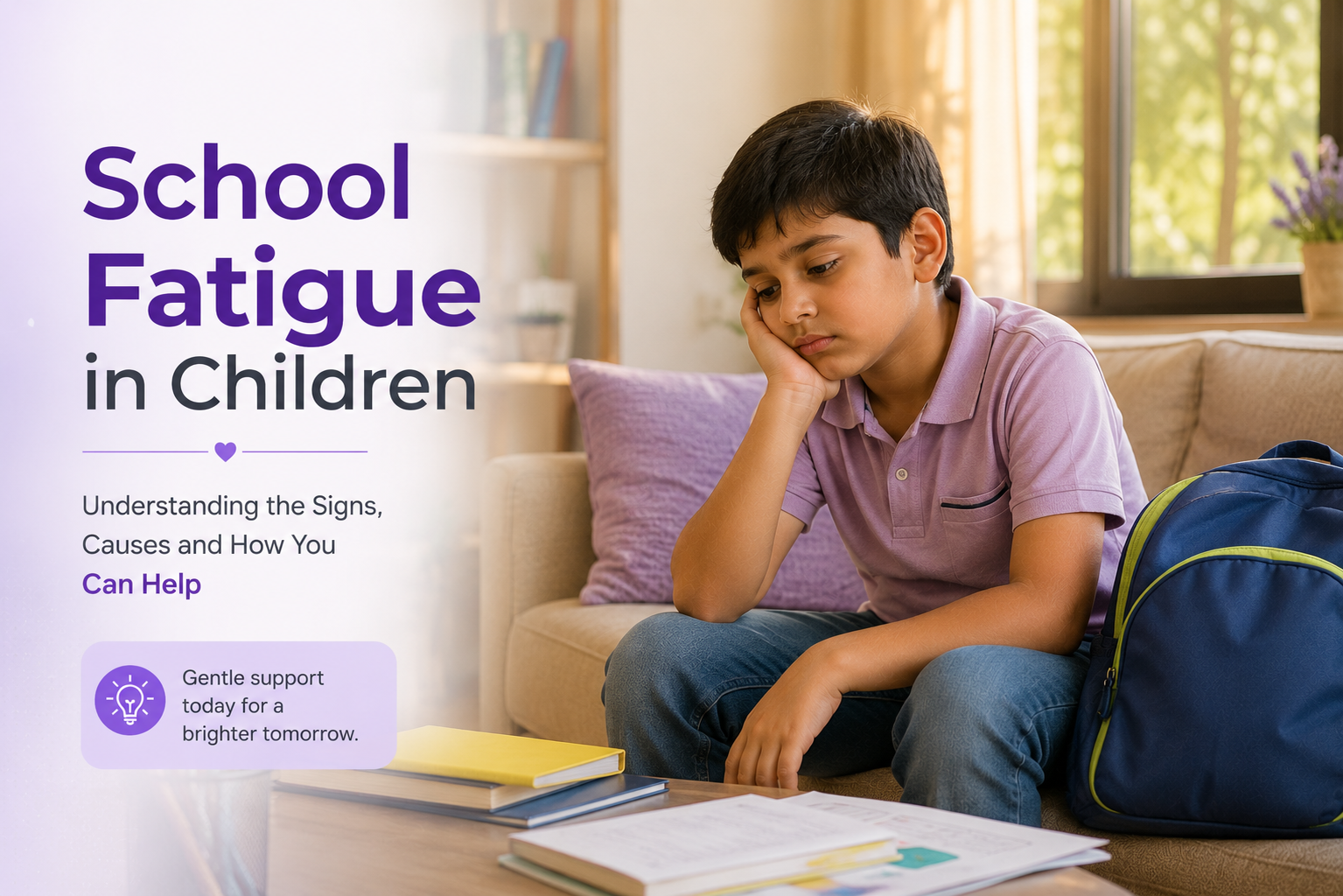
Every parent looks forward to hearing about their child’s day at school. But for many families, afternoons look very different. Instead of excitement and energy, they see irritability, tears, silence, or complete exhaustion. School Fatigue in Children has become a growing concern among parents today, especially as children face increasing academic expectations, social pressures, extracurricular activities, and screen exposure. While feeling tired after school is natural, persistent emotional and physical exhaustion may indicate that a child is struggling to cope with the demands of their daily environment.
Children often do not have the words to explain how overwhelmed they feel. Instead, their fatigue may appear as emotional outbursts, withdrawal, lack of concentration, or resistance to homework and social activities. Understanding the reasons behind school fatigue can help parents provide the right support and improve their child’s emotional well-being and confidence.
Why Do Children Feel So Exhausted After School?
School is not just about academics. Throughout the day, children constantly process information, manage emotions, interact with peers, follow instructions, and adapt to changing situations. For some children, this continuous effort can become mentally and physically draining.
There are several reasons why school fatigue is becoming more common:
1. Sensory Overload
Classrooms can be noisy and stimulating environments. Bright lights, multiple conversations, bells ringing, crowded hallways, and changing activities require children to process large amounts of sensory information throughout the day.
For children with sensory sensitivities, this constant stimulation can become exhausting.
Parents may notice that their child:
- Wants complete silence after school
- Becomes irritable for no obvious reason
- Avoids conversations
- Prefers to stay alone
- Appears emotionally overwhelmed
2. Social Exhaustion
School requires children to interact with teachers, classmates, and friends throughout the day. For children who struggle with communication, social anxiety, or emotional regulation, these interactions can require tremendous effort.
Some children spend the entire school day trying to “fit in” or understand social situations. By the time they return home, they may simply be emotionally exhausted.
3. Difficulty Maintaining Attention
Children who experience attention challenges often use extra energy trying to stay focused in class. Following instructions, completing assignments, and ignoring distractions may require significant mental effort.
Parents sometimes mistake this exhaustion for laziness when, in reality, their child has been working extremely hard throughout the day.
4. Increased Academic Pressure
Modern children often have packed schedules filled with schoolwork, tuition classes, activities, and expectations to perform well academically.
When children have very little time to relax, recharge, or engage in unstructured play, fatigue can gradually build up and affect their emotional well-being.
5. Excessive Screen Time
Many children spend several hours using screens after school. While screens may seem relaxing, excessive screen exposure can overstimulate the brain, disrupt sleep patterns, and increase mental fatigue.
Children need opportunities for movement, creativity, and real-world interaction to balance their day.
Signs of School Fatigue That Parents Should Watch For
School fatigue does not always look like physical tiredness. It can affect emotions, behavior, and daily routines in different ways.
Parents may notice:
- Frequent meltdowns after school
- Complaints of headaches or stomach aches
- Increased irritability
- Avoidance of homework
- Difficulty concentrating
- Withdrawal from family conversations
- Lack of motivation
- Trouble sleeping
- Emotional sensitivity
- Increased anxiety
These signs do not necessarily mean a child dislikes school. In many cases, they indicate that a child is overwhelmed by the demands of the day and needs support managing their energy and emotions.
How Occupational Therapy Can Help
At Shaping Insight, Mulund, we understand that every child experiences school differently. Occupational Therapy focuses on helping children develop the skills they need to participate comfortably and confidently in daily life.
Therapy can help children:
Improve Sensory Regulation
Children learn how to process sensory information more effectively, helping them feel calmer and less overwhelmed in busy environments.
Therapy activities may focus on:
- Managing noise sensitivity
- Improving body awareness
- Developing calming strategies
- Increasing tolerance to sensory experiences
Strengthen Attention and Focus
Therapy helps children improve:
- Concentration skills
- Task completion
- Planning and organization
- Self-regulation
- Classroom participation
These skills help children use their mental energy more efficiently during school hours.
Build Emotional Regulation Skills
Children are taught ways to:
- Identify emotions
- Understand stress signals
- Express feelings appropriately
- Develop coping strategies
- Manage frustration and anxiety
Learning these skills can make school and social interactions feel less overwhelming.
The Role of Sensory-Based Therapies
At Shaping Insight, children may also benefit from sensory-based approaches such as Snoezelen Therapy.
This specialized environment helps children:
- Relax their nervous system
- Reduce sensory overload
- Improve emotional regulation
- Develop body awareness
- Feel calmer and more focused
These calming experiences often help children recover from daily stress and participate more comfortably in everyday activities.
Simple Ways Parents Can Support Children After School
Parents can help children recharge by creating calm and predictable after-school routines.
Some helpful strategies include:
Allow Quiet Time
Not every child wants to talk immediately after school.
Give children:
- Time to relax
- Space to play quietly
- Opportunities to decompress
- Freedom from immediate questions
Many children open up naturally once they feel emotionally settled.
Encourage Physical Activity
Movement helps children release stress and improve mood.
Simple activities such as:
- Outdoor play
- Cycling
- Swimming
- Walking
- Dancing
can improve both physical and emotional well-being.
Reduce Screen Time
Encourage:
- Reading books
- Creative play
- Family games
- Arts and crafts
- Conversation during meals
These activities help children reconnect emotionally and reduce overstimulation.
Maintain Healthy Sleep Habits
Adequate sleep is essential for:
- Learning
- Emotional regulation
- Memory
- Attention
- Physical growth
Creating consistent bedtime routines can significantly improve a child’s ability to manage school demands.
Supporting Children Beyond Academics
Success in school is not measured only by grades. Emotional well-being, confidence, social skills, and resilience are equally important.
Children who feel emotionally supported are better able to:
- Handle challenges
- Build friendships
- Develop independence
- Participate confidently in school
- Enjoy learning experiences
When parents understand that school fatigue is more than simply “being tired,” they can provide the empathy and support children truly need.
At Shaping Insight, Mulund, our goal is to help children feel more balanced, confident, and emotionally secure so they can enjoy both learning and everyday life.
With early support, the right strategies, and a nurturing environment, children can learn to manage school demands effectively while maintaining their energy, happiness, and confidence.