

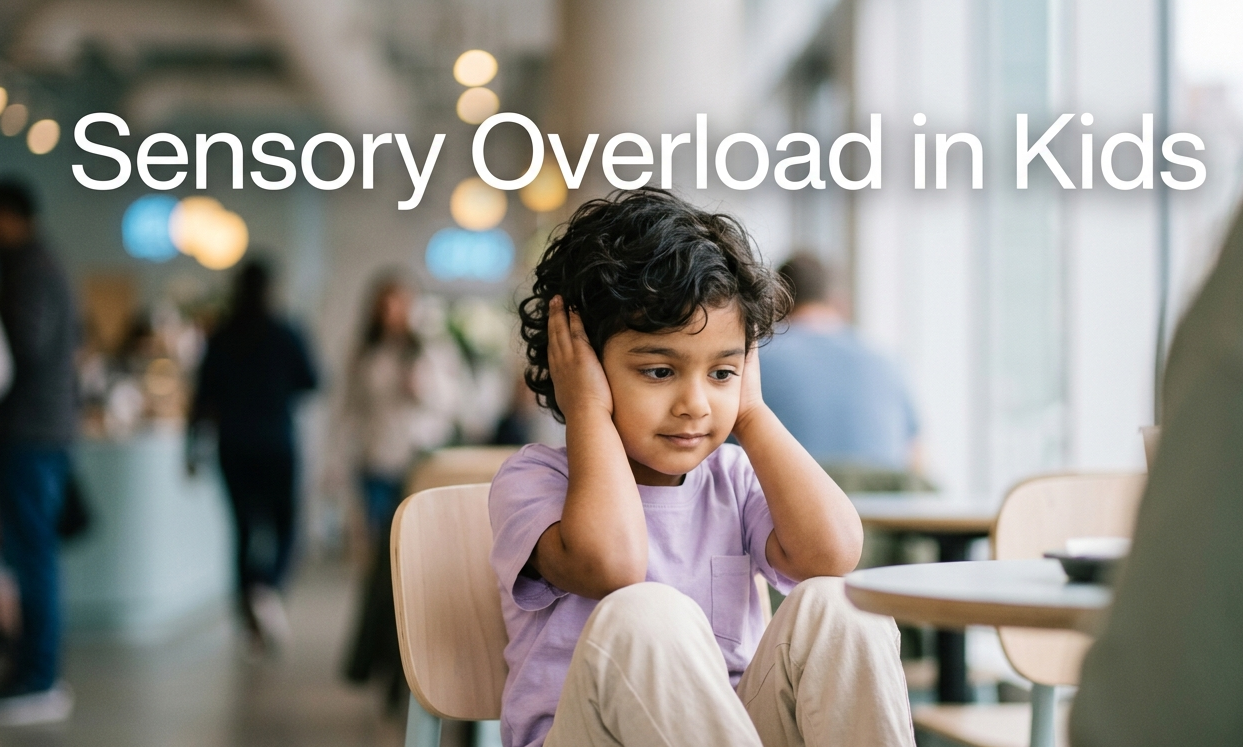
Many parents today notice that their child reacts strongly to sounds, avoids certain textures, becomes upset in crowded places, or seems overwhelmed by everyday situations. This often leads to the question, “Is this just a phase, or could it be sensory overload in children?” While occasional sensitivity is a normal part of development, consistent patterns of discomfort, meltdowns, or withdrawal may indicate sensory processing challenges that require professional attention.
Children experience the world through their senses. For most children, the brain naturally organizes sensory information, allowing them to respond appropriately to their surroundings. However, for some children, the brain finds it difficult to process and regulate sensory input efficiently. As a result, ordinary experiences that seem harmless to others may feel confusing, uncomfortable, or overwhelming. Understanding sensory overload is the first step toward helping children feel safe, regulated, and confident in their everyday lives.
Why Is Sensory Processing Important for Child Development?
Sensory processing is the brain’s ability to receive, organize, interpret, and respond to information from the environment. It allows children to participate successfully in learning, play, communication, movement, and self-care activities.
Healthy sensory processing helps children:
- Stay calm in different environments
- Focus during classroom activities
- Participate in play and social interactions
- Regulate emotions effectively
- Respond appropriately to sounds, touch, movement, and visual input
- Develop independence in daily routines
- Build confidence in new situations
- Improve attention, learning, and problem-solving skills
- Develop better body awareness and coordination
- Adapt comfortably to changing environments
When sensory processing becomes difficult, children may struggle to regulate their responses, making everyday situations more stressful than enjoyable.
Understanding Sensory Overload in Children
Sensory overload happens when a child’s brain finds it difficult to process and respond to sensory information like sound, touch, movement, or visual input. For some children, everyday experiences like a noisy classroom, bright lights, or even wearing certain clothes can feel overwhelming.
Sensory overload occurs when the brain receives more sensory information than it can comfortably organize. Instead of filtering unnecessary sensations, the child experiences everything at once, which may lead to stress, anxiety, emotional outbursts, or withdrawal.
You might notice your child:
- Covering their ears frequently
- Avoiding physical touch or certain fabrics
- Getting easily irritated in crowded places
- Having sudden meltdowns without a clear reason
- Struggling to focus or stay calm
- Complaining about loud noises that others barely notice
- Refusing to wear certain clothing because of texture or labels
- Avoiding busy shopping malls, birthday parties, or public events
- Becoming distressed by bright lights, strong smells, or unexpected touch
- Seeking quiet places when feeling overwhelmed
These are not “behavior problems” but signs that your child may be having difficulty regulating sensory input.
At Shaping Insight, Mulund, we often see children who are misunderstood as “overreacting” or “difficult,” when in reality, they are simply overwhelmed.
Common Signs of Sensory Overload
Children experiencing sensory overload may display different behaviours depending on their individual sensory profile. Some common signs include:
- Frequent emotional meltdowns in busy environments
- Difficulty concentrating in classrooms or group settings
- Avoidance of hugs, haircuts, or toothbrushing
- Strong reactions to loud sounds such as vacuum cleaners, mixers, or school bells
- Sensitivity to clothing seams, tags, or specific fabrics
- Difficulty transitioning between environments
- Becoming easily fatigued after social or sensory-rich activities
- Seeking constant movement or, alternatively, avoiding movement-based activities
Every child experiences sensory processing differently, and symptoms can vary in intensity depending on the environment and situation.
Why Do Some Children Experience Sensory Overload?
There are several reasons why a child may become overwhelmed by sensory information. Some of the most common causes include:
1. Sensory Processing Differences
Some children naturally process sensory information more intensely than others, making everyday sights, sounds, textures, or movements feel overwhelming.
2. Difficulty Filtering Sensory Input
The brain may struggle to prioritize important sensory information while filtering out unnecessary background stimuli, causing children to become easily distracted or distressed.
3. Emotional Regulation Challenges
When sensory input becomes overwhelming, children may find it difficult to regulate their emotions, resulting in frustration, anxiety, or emotional outbursts.
4. Developmental Conditions
Sensory processing challenges may sometimes be associated with developmental conditions such as Autism Spectrum Disorder (ASD), Attention Deficit Hyperactivity Disorder (ADHD), developmental delays, or anxiety disorders. However, sensory sensitivities alone do not indicate any specific diagnosis, and a comprehensive assessment is always recommended.
5. Environmental Factors
Busy classrooms, crowded public places, excessive screen exposure, loud environments, and unpredictable routines can increase sensory overload in children who are already sensitive to sensory input.
The Emotional Impact of Sensory Overload
Sensory overload affects more than a child’s physical comfort. It can also influence emotional well-being, confidence, and social participation.
Children may:
- Feel anxious in unfamiliar environments
- Withdraw from family gatherings or social activities
- Avoid participating in school events
- Become frustrated when they cannot explain what they are experiencing
- Develop low self-confidence due to repeated misunderstandings
When adults understand the reason behind these behaviours, children feel more supported, accepted, and emotionally secure.
How Occupational Therapy Helps Children Feel More in Control
The good news is that with the right support, children can learn to manage sensory challenges effectively. Occupational Therapy plays a key role in helping children process sensory input in a more balanced way.
Rather than trying to eliminate sensory sensitivities, Occupational Therapy helps children develop better sensory regulation, emotional control, attention, body awareness, and adaptive coping strategies. As children become more regulated, they naturally participate more confidently in school, home, and community activities.
At Shaping Insight, we use structured Occupational Therapy along with specialized approaches like Snoezelen Therapy to create a calming and controlled sensory environment.
Snoezelen Therapy provides carefully designed multisensory experiences using gentle lighting, soothing sounds, tactile materials, and calming environments that help children feel relaxed, improve attention, and regulate sensory responses in a safe and enjoyable setting.
These therapy sessions are designed to:
- Help children tolerate different sensory inputs
- Improve focus and attention
- Reduce anxiety and meltdowns
- Build self-regulation skills
- Improve emotional regulation and coping strategies
- Strengthen sensory integration and body awareness
- Enhance participation in classroom and daily activities
- Increase confidence during social interactions
Each child receives a personalized therapy plan based on detailed assessments, ensuring that their unique needs are addressed.
Every therapy program is individualized according to the child’s sensory profile, developmental strengths, and functional goals, allowing progress at a comfortable and achievable pace.
Simple Ways Parents Can Support Sensory Regulation at Home
Parents also play an important role in supporting their child’s sensory development through everyday routines.
Some effective strategies include:
- Create a calm corner where your child can relax
- Reduce excessive background noise when possible
- Follow predictable daily routines
- Provide advance warnings before transitions
- Encourage outdoor play and physical activity
- Allow your child to take short sensory breaks when needed
- Choose comfortable clothing that your child enjoys wearing
- Gradually introduce new sensory experiences without forcing participation
- Observe which environments help your child feel calm and regulated
- Celebrate small successes and remain patient during challenging moments
Small adjustments at home can significantly improve your child’s ability to manage sensory experiences and feel more confident throughout the day.
When Should Parents Seek Professional Help?
Consider consulting an Occupational Therapist if your child:
- Frequently becomes overwhelmed by sounds, lights, textures, or movement
- Experiences repeated meltdowns in sensory-rich environments
- Avoids age-appropriate activities because of sensory discomfort
- Shows persistent difficulty concentrating due to sensory distractions
- Has strong reactions to everyday sensory experiences
- Struggles with self-regulation despite consistent support
- Experiences challenges that affect school performance, daily routines, or social participation
Early assessment helps identify your child’s unique sensory profile and allows therapists to develop personalized intervention strategies before sensory challenges begin affecting learning, confidence, and emotional well-being.
Supporting Your Child’s Sensory Journey
Early intervention can make a significant difference. When sensory challenges are addressed early, children become more confident, better at handling daily situations, and more comfortable in social environments.
At Shaping Insight, Mulund – Mumbai, our experienced Occupational Therapists provide individualized assessments and evidence-based therapy programs that support sensory processing, emotional regulation, attention, functional independence, and overall child development. Through personalized Occupational Therapy and specialized Snoezelen Therapy, we help children build the skills they need to navigate everyday environments with greater comfort and confidence.
If you’ve been searching for answers or wondering whether your child needs support, trust your observations. Understanding sensory overload is the first step, and with the right therapy, your child can learn to navigate the world with greater ease and confidence.
Every child experiences the world differently. With early intervention, patient guidance, and active family involvement, children can make remarkable progress in sensory regulation, communication, learning, and social participation. Helping your child feel understood and supported today lays the foundation for lifelong confidence, independence, and emotional well-being.