

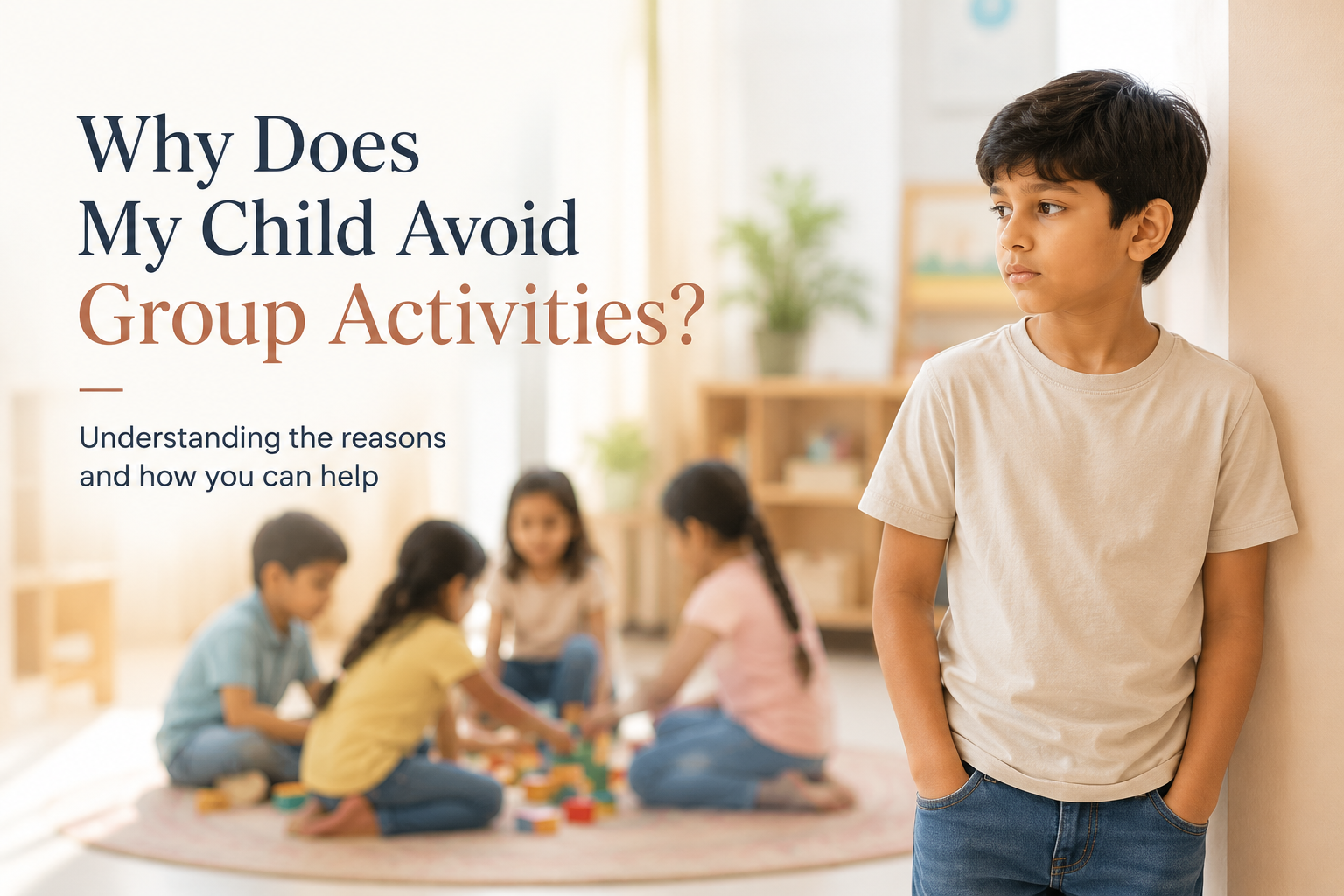
One concern that many parents are discussing today is “Why does my child avoid group activities?” Some children become anxious during social interactions, avoid participating in school activities, or prefer spending time alone rather than engaging with friends or classmates. While every child has a unique personality and develops social skills at their own pace, consistently avoiding group activities may affect emotional development, communication skills, confidence, and the ability to build meaningful relationships.
Children naturally learn through play, observation, and interaction with others. Participating in group activities helps them develop teamwork, problem-solving abilities, emotional regulation, language skills, and social confidence. When a child repeatedly avoids social situations, it is important to understand the underlying reason instead of assuming they are simply shy or introverted.
Every child is different, and social participation can be influenced by personality, developmental stage, sensory preferences, communication abilities, and past experiences. Identifying the cause early allows parents to provide the right support and helps children develop confidence in social environments.
Why Are Group Activities Important for Child Development?
Group activities are much more than games or classroom participation—they are essential for healthy social, emotional, cognitive, and communication development.
Through group interactions, children learn to:
- Build friendships
- Develop communication skills
- Understand social rules
- Practice sharing and teamwork
- Improve listening skills
- Solve problems together
- Build emotional resilience
- Learn empathy and cooperation
- Develop leadership and decision-making skills.
- Improve attention span and classroom participation.
- Strengthen self-confidence through positive peer interactions.
Whether it is participating in classroom discussions, sports, music classes, birthday parties, or family gatherings, these experiences help children feel connected and develop lifelong interpersonal skills.
Why Do Some Children Avoid Social Participation?
Children may avoid group situations for several reasons, including sensory sensitivities, communication difficulties, anxiety, low self-confidence, developmental differences, or previous negative social experiences. Loud environments, unfamiliar situations, or difficulty understanding social cues can make participation feel overwhelming.
Some common reasons include:
1. Sensory Processing Difficulties
Children with sensory processing challenges may become overwhelmed by loud sounds, bright lights, crowded rooms, or too much movement around them. Instead of joining activities, they may withdraw because the environment feels stressful or exhausting.
2. Communication Challenges
Some children struggle to express themselves or understand conversations.
Children with speech and language delays may avoid group settings because they find it difficult to communicate, answer questions, or keep up with conversations.
3. Social Anxiety
Fear of being judged, making mistakes, or speaking in front of others can make group participation uncomfortable. Children experiencing anxiety may avoid eye contact, remain silent, or stay close to familiar adults.
4. Low Self-Confidence
Children who have experienced criticism, bullying, or repeated difficulties during social interactions may lose confidence and prefer to stay away from group activities.
5. Developmental Differences
Some developmental conditions, including Autism Spectrum Disorder (ASD), ADHD, sensory processing challenges, or developmental delays, can affect a child’s ability to participate comfortably in social situations. However, avoiding group activities alone does not indicate any specific diagnosis. A professional developmental assessment provides a clearer understanding of a child’s strengths and challenges.
Signs Your Child May Be Struggling with Social Participation
Parents may notice:
- Avoiding birthday parties or classrooms
- Difficulty making friends
- Fear of speaking in groups
- Becoming overwhelmed in noisy environments
- Emotional shutdown during interaction
- Preferring to play alone most of the time
- Avoiding extracurricular activities
- Difficulty joining games with other children
- Feeling anxious before school or social events.
- Becoming upset when routines change or new people are introduced.
- Watching others play instead of participating themselves.
- Avoiding answering questions in class despite knowing the answer.
Children who struggle socially are often misunderstood as “quiet,” “reserved,” or “anti-social,” when they may actually be experiencing sensory overload, communication difficulties, or uncertainty about how to interact with others.
How Social Withdrawal Can Affect Development
When children regularly avoid social situations, they may miss valuable opportunities to develop important life skills.
Without appropriate support, children may experience:
- Difficulty building friendships
- Delayed communication development
- Reduced self-confidence
- Challenges in teamwork
- Increased anxiety during school activities
- Difficulty expressing emotions
- Reduced classroom participation
- Poor emotional regulation during stressful situations.
- Difficulty adapting to new environments or routines.
Supporting social participation early can help children become more confident, independent, and emotionally resilient throughout childhood.
How Therapy Supports Social Confidence
At Shaping Insight, Mulund, we believe every child deserves to feel confident and included in everyday social situations. Our individualized therapy programs focus on understanding the root cause of social withdrawal and helping children develop practical communication and interaction skills in a safe, encouraging environment.
Occupational Therapy, Speech Therapy, and sensory-based interventions can help children improve interaction, emotional regulation, and confidence in social settings. Therapy sessions focus on helping children feel safe, understood, and gradually comfortable engaging with others.
Therapy may include:
- Communication-building activities
- Social interaction games
- Sensory regulation exercises
- Emotional expression strategies
- Confidence-building routines
- Group play sessions
- Role-playing real-life social situations.
- Turn-taking and cooperative play activities.
- Listening and conversation-building exercises.
- Activities that improve emotional awareness and problem-solving skills.
How Snoezelen Therapy Can Help
For children who become overwhelmed in busy or noisy environments, Snoezelen Therapy provides a calming multisensory environment that helps regulate sensory responses and reduce anxiety.
Therapies like Snoezelen Therapy also help children feel calmer and more regulated in overstimulating situations.
As children become more emotionally regulated, they often feel more comfortable participating in social activities, communicating with peers, and exploring new experiences with greater confidence.
How Parents Can Encourage Social Participation at Home
Parents play an essential role in helping children build social confidence.
Some simple strategies include:
- Encourage family games
- Arrange small playdates
- Practice role-playing conversations
- Celebrate small social achievements
- Read books about friendship and emotions
- Reduce pressure during interactions
- Create predictable routines
- Allow children to observe group activities before expecting participation.
- Praise effort rather than focusing on outcomes.
- Encourage hobbies that naturally involve teamwork, such as art classes, music, or sports.
- Model positive social behaviour through everyday family interactions.
Gradual exposure, patience, and consistent encouragement often help children become more comfortable in group settings over time.
When Should Parents Seek Professional Support?
Consider consulting a therapist if your child:
- Frequently avoids group activities
- Has difficulty making friends
- Becomes distressed in social settings
- Has delayed speech or communication skills
- Experiences sensory sensitivities
- Shows low confidence around peers
- Has emotional meltdowns during group interaction
- Avoids school participation despite encouragement.
- Finds it difficult to communicate feelings or needs in social situations.
Early assessment helps identify the underlying factors affecting social participation and allows therapists to create individualized intervention plans that support communication, confidence, sensory regulation, and emotional well-being.
Helping Your Child Build Social Confidence
Every child deserves the opportunity to enjoy friendships, participate confidently in school, and feel comfortable in social environments. Avoiding group activities does not mean a child lacks interest in others—it may simply mean they need additional support to feel safe, understood, and confident.
At Shaping Insight, Mulund, our experienced therapists provide Occupational Therapy, Speech Therapy, Sensory Integration Therapy, and Snoezelen Therapy to help children improve communication, regulate emotions, strengthen social skills, and build confidence in everyday interactions.
With early intervention, individualized therapy, and active family involvement, children can develop stronger communication abilities, healthier relationships, greater emotional resilience, and the confidence to participate in school, community, and family activities. Every small step toward social engagement creates a foundation for lifelong learning, independence, and meaningful connections.